Nottingham, UK | A Way To Unwind | NTU
After visiting the Serpentine Gallery in Hyde Park and exploring that year’s pavilion, I began to reflect on how I might approach designing a pavilion myself. I was interested in challenging the surrounding environment while simultaneously creating a place of rest. This curiosity became the basis for a design brief that I developed and explored during my university studies.
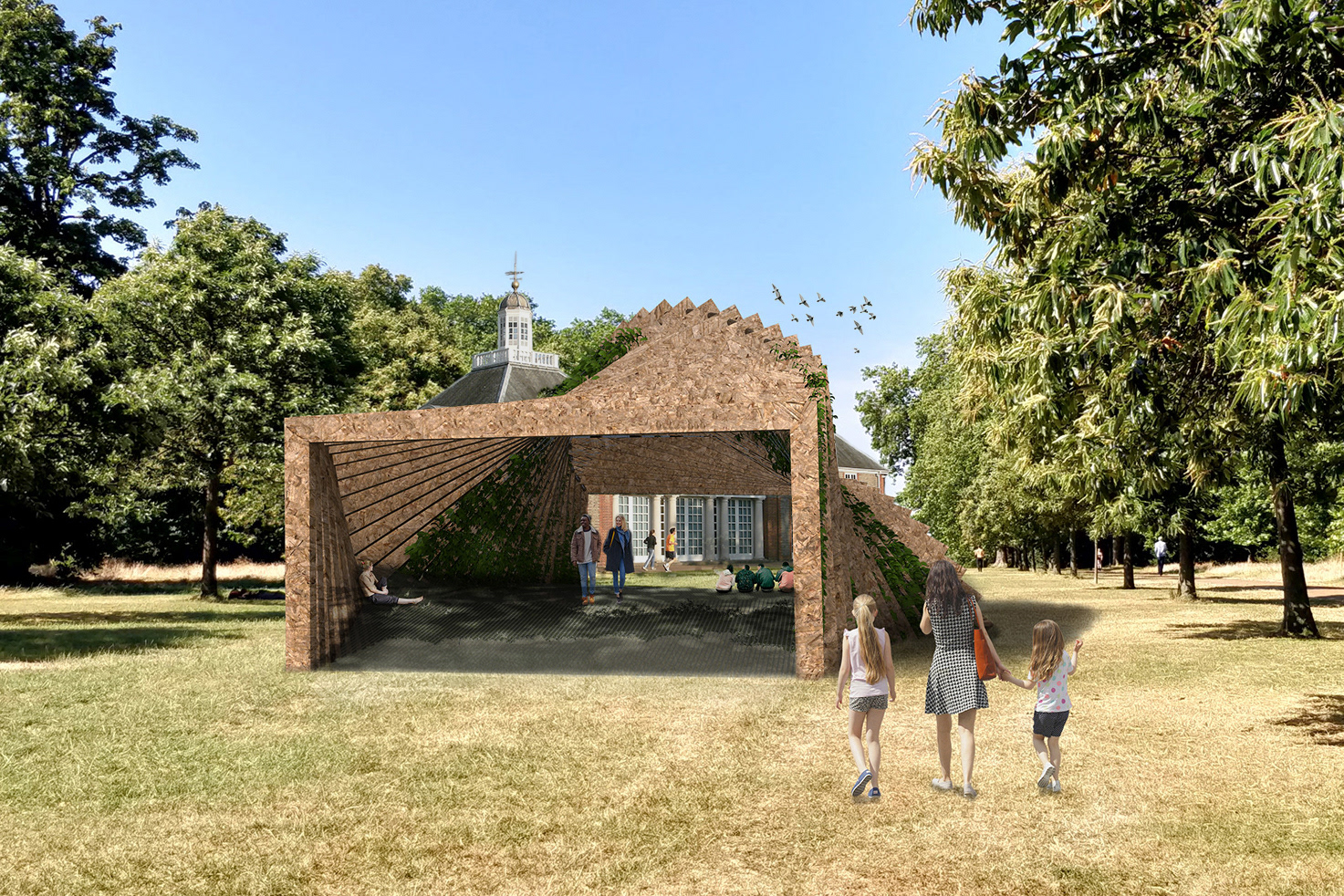
There are millions of people moving to cities all around the world and these built up environments have polluted air that can cause health problems. The aim was to design a structure that targets this and develop a sustainable solution. Carbon dioxide emissions impact human health by displacing oxygen. Incorporating plants into the structure means that CO2 emissions can be absorbed and airborne dust levels reduced. Creating this large net like structure uses this and helps filters the air.
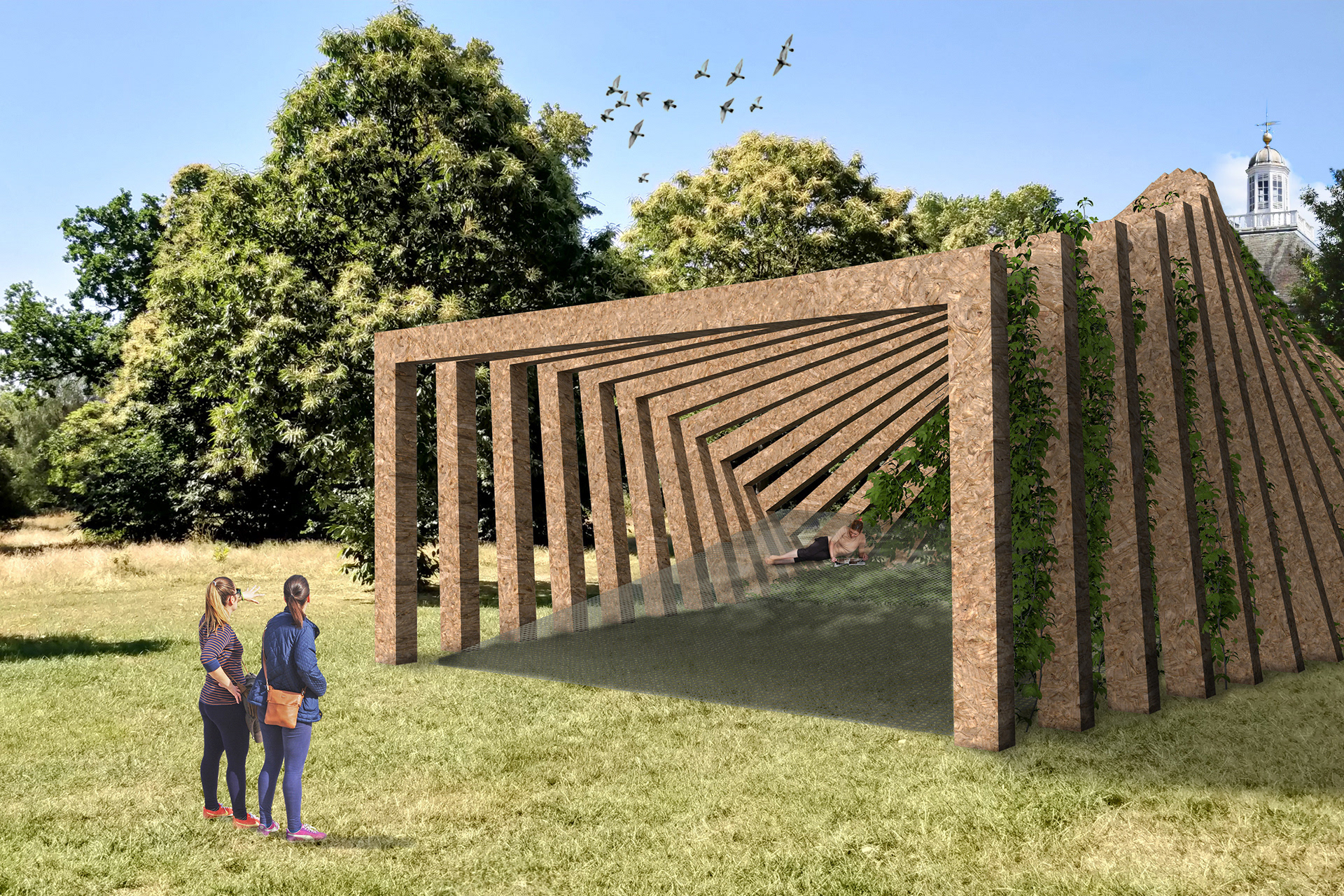
Exposure to plants and views of vegetation reduces stress, restores attentional capacity, and improves performance on a variety of tasks. I see this as a place for people in the city to unwind and escape from day to day city life.
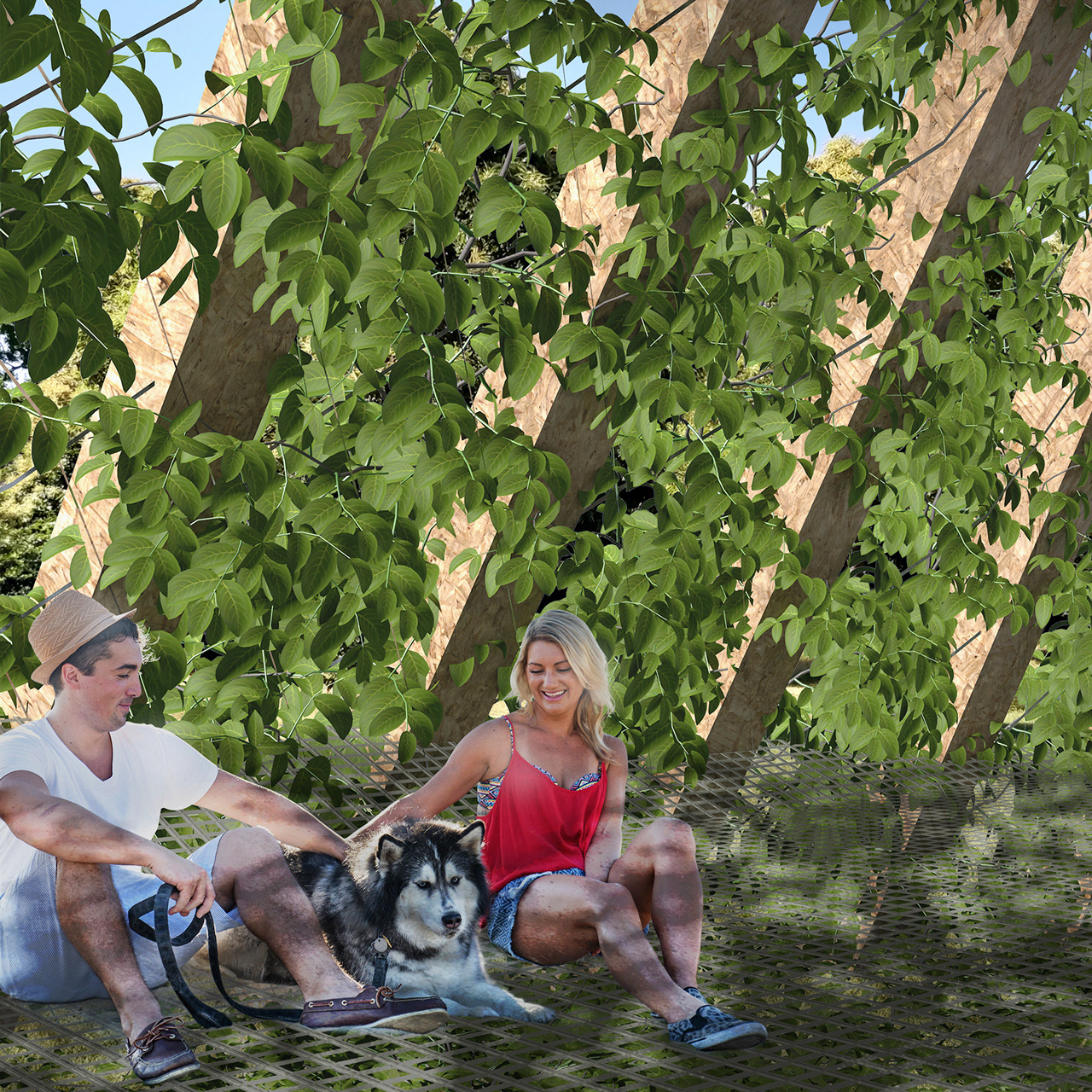
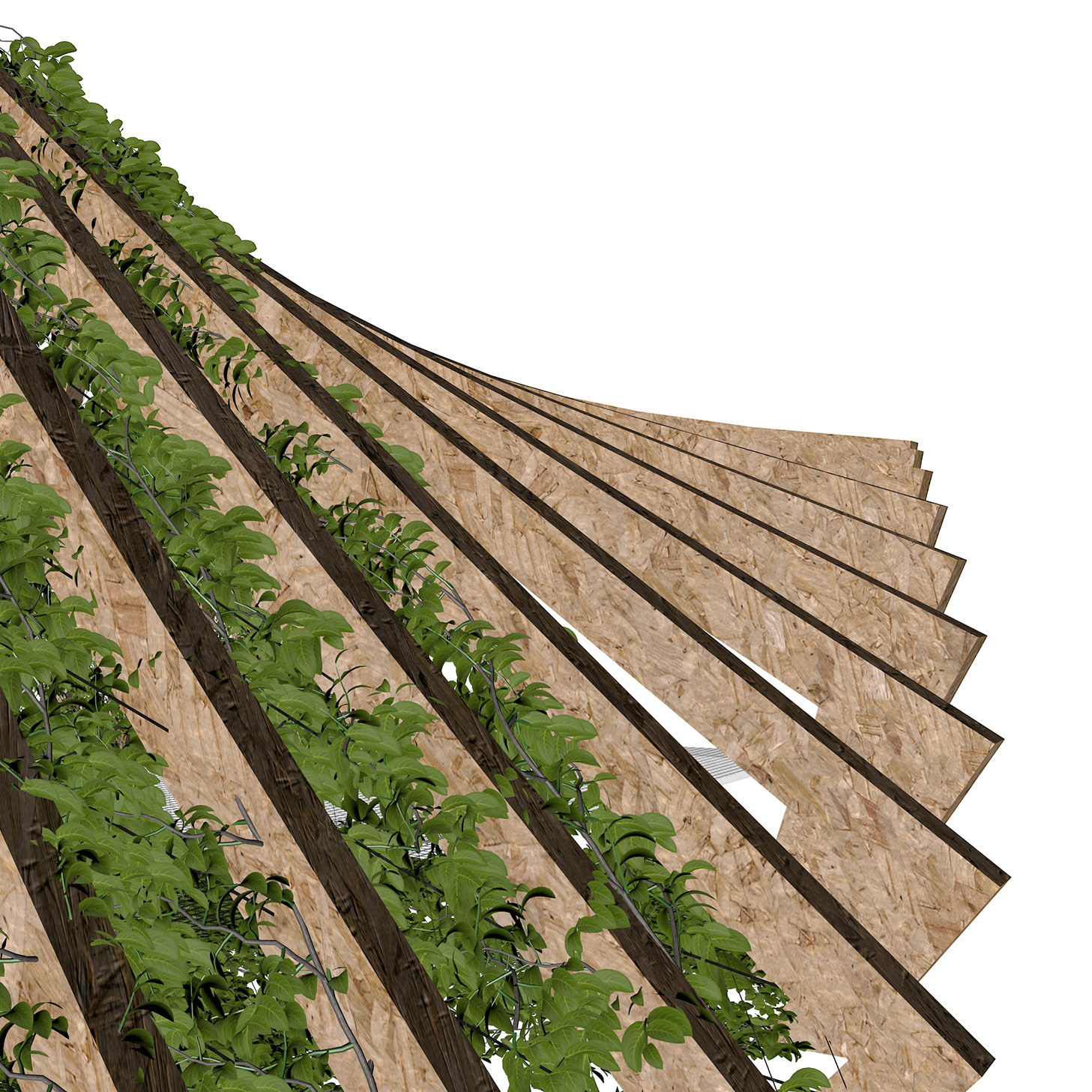
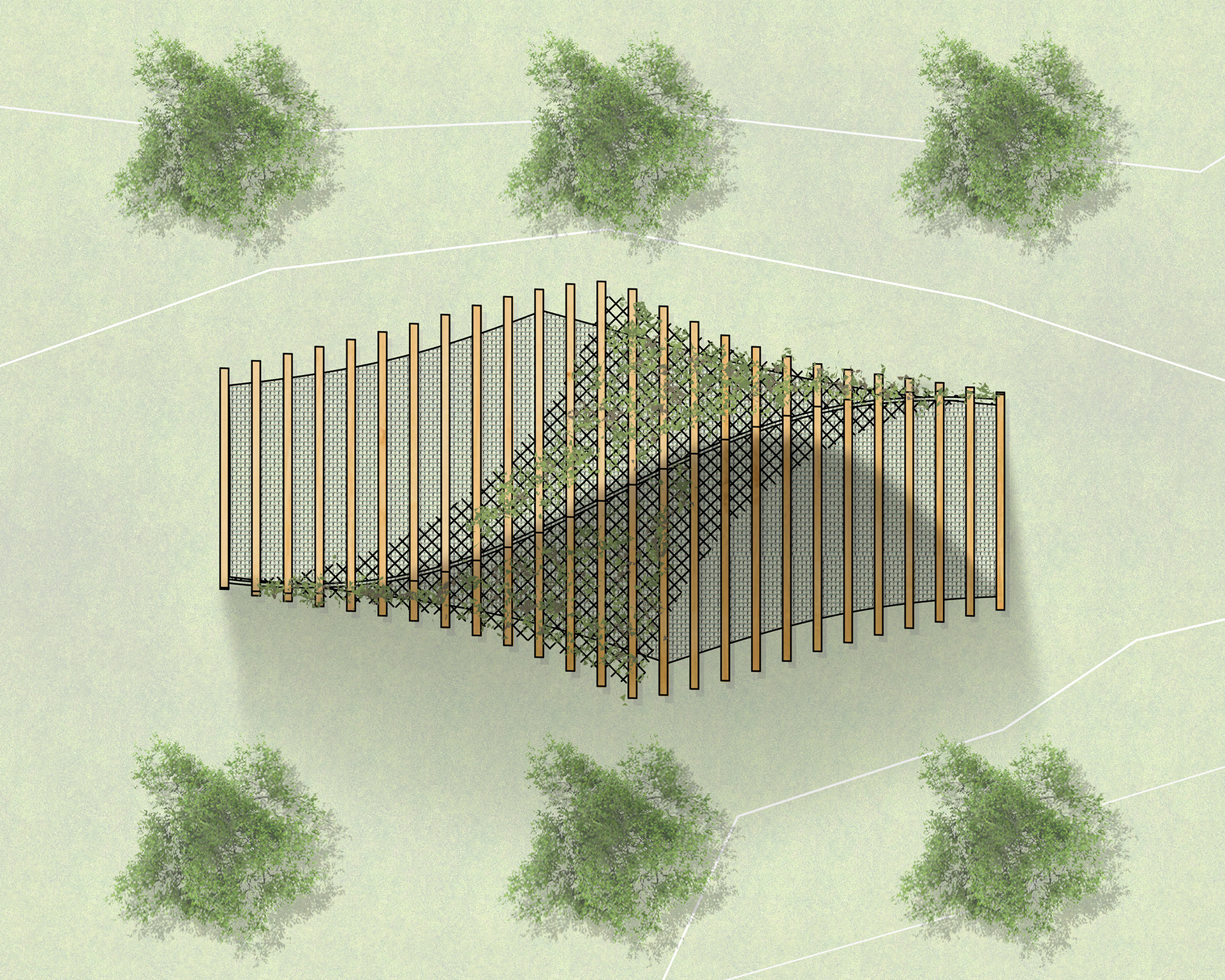
The structure is made up of twenty-six timber frames with incrementally different dimensions, creating the spiral effect of the pavilion. Each frame is jointed at 90 degrees throughout to create a fluid flow. This opens up space to breathe within, while also blocking views of the urban surroundings and lowering the background noise in the surrounding area. It is mainly shaded by vegetation but light is able to break through the gaps, more so at the top of the structure where there is less vegetation for a healthy balance.
Influenced by Thilo Frank insulation ‘EKKO’
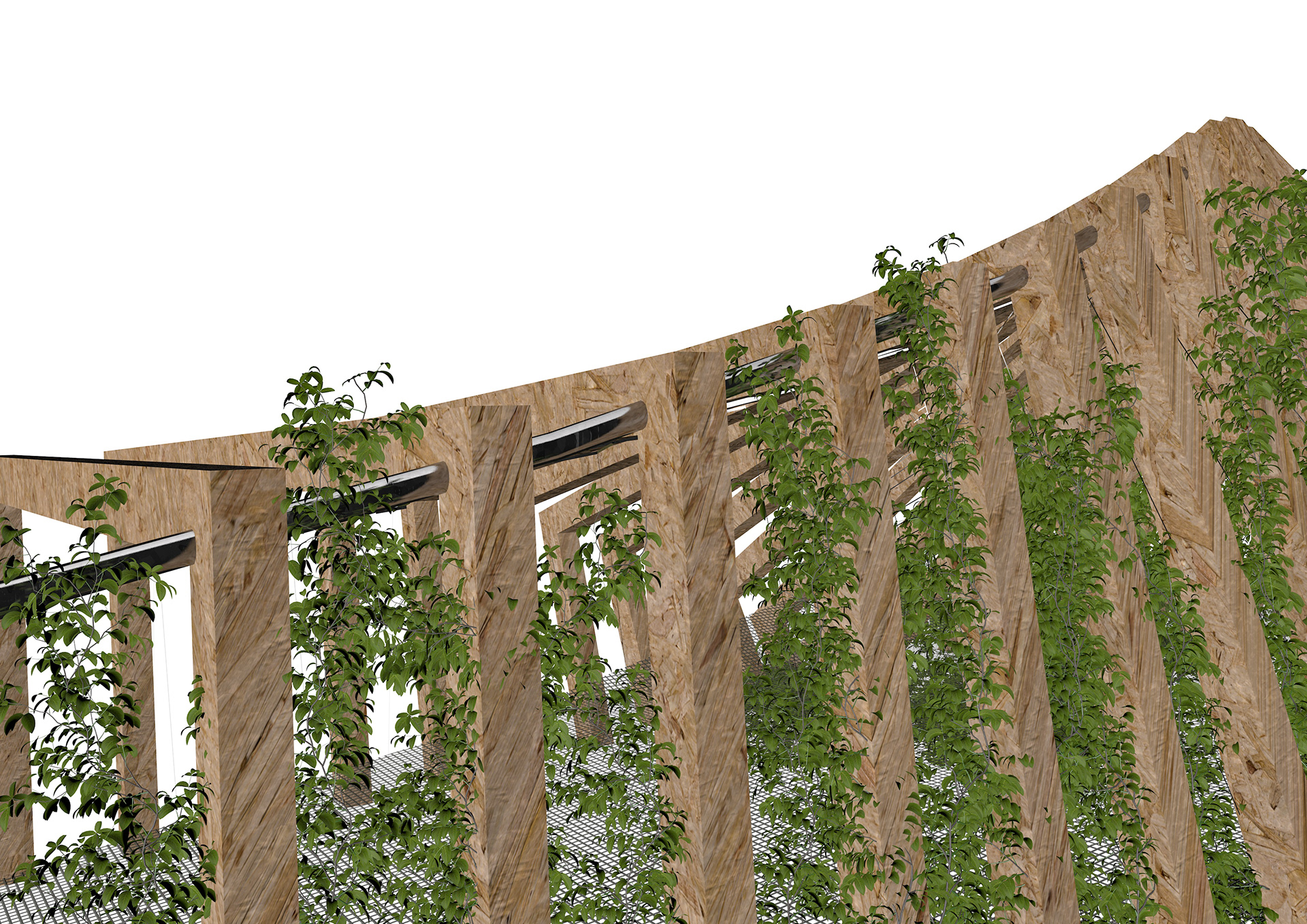
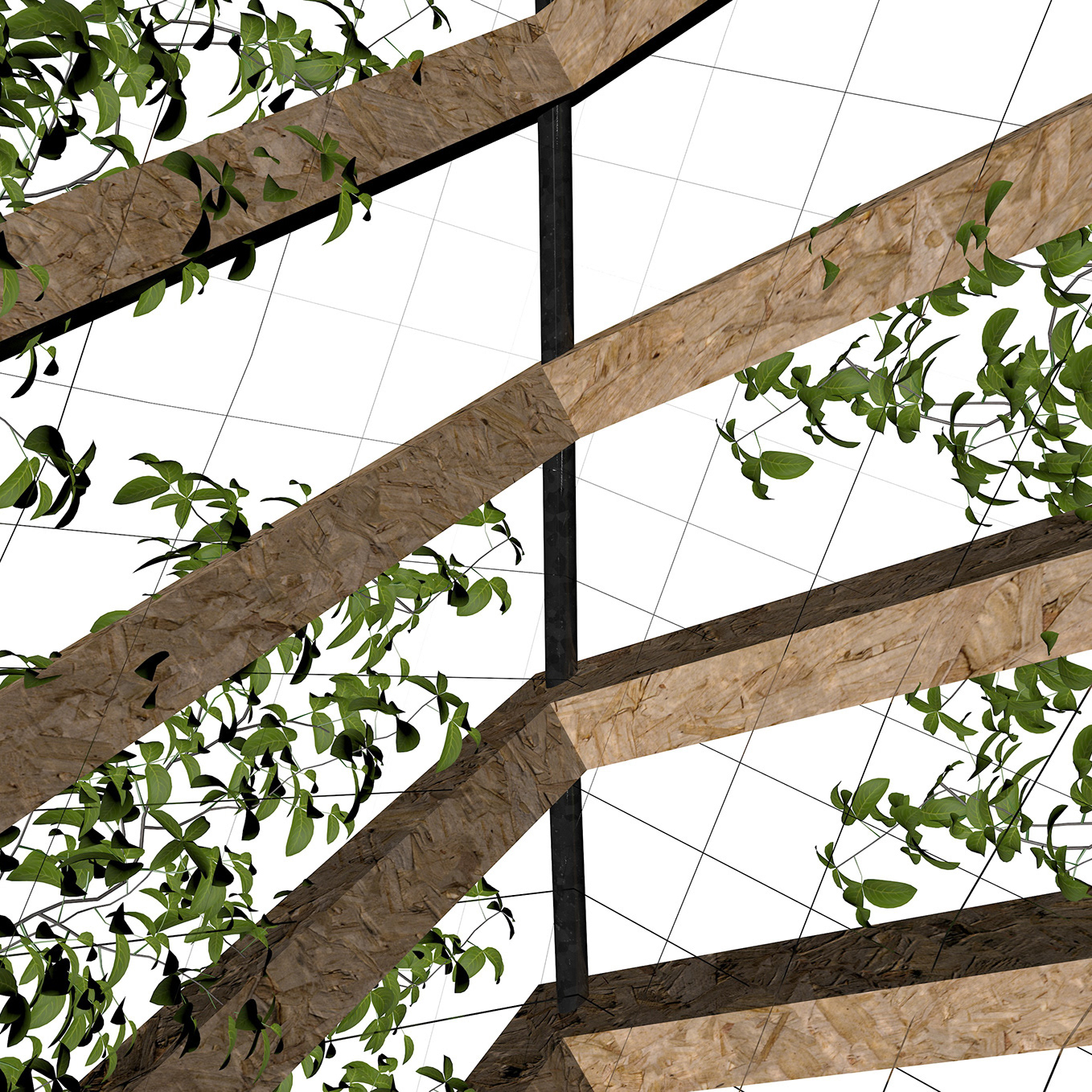
Within the structure, a floating walkway is formed through a suspended membrane and the lateral tension of a flat netting system. This interactive element encourages users to engage with the pavilion as a space for rest and relaxation. The open construction allows air to circulate freely, promoting continuous airflow throughout the structure. Additionally, the space beneath the walkway accommodates vegetation and architectural landscaping, further integrating the pavilion with its environment.
Influenced by Numen Studio ‘Net Hasselt’
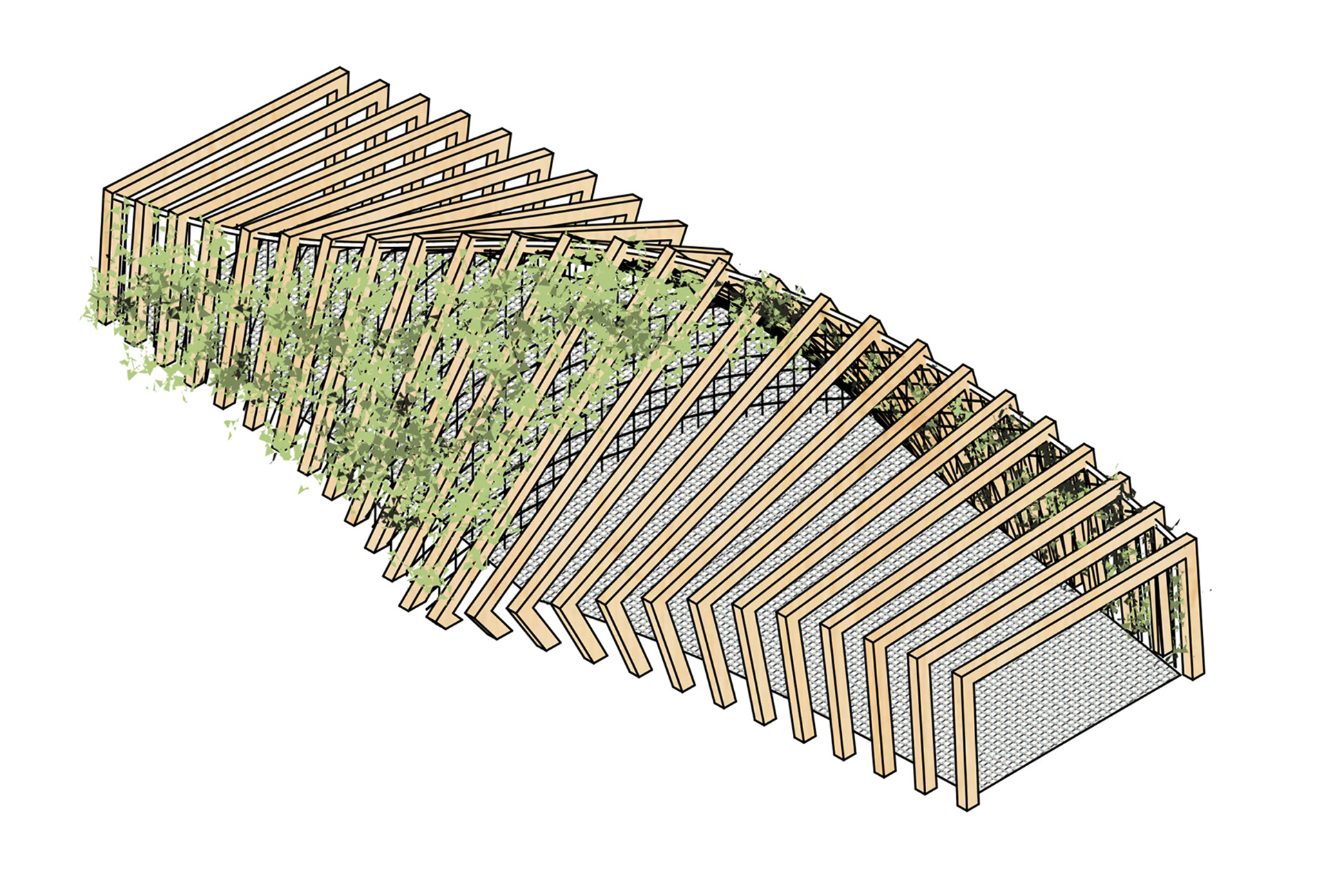
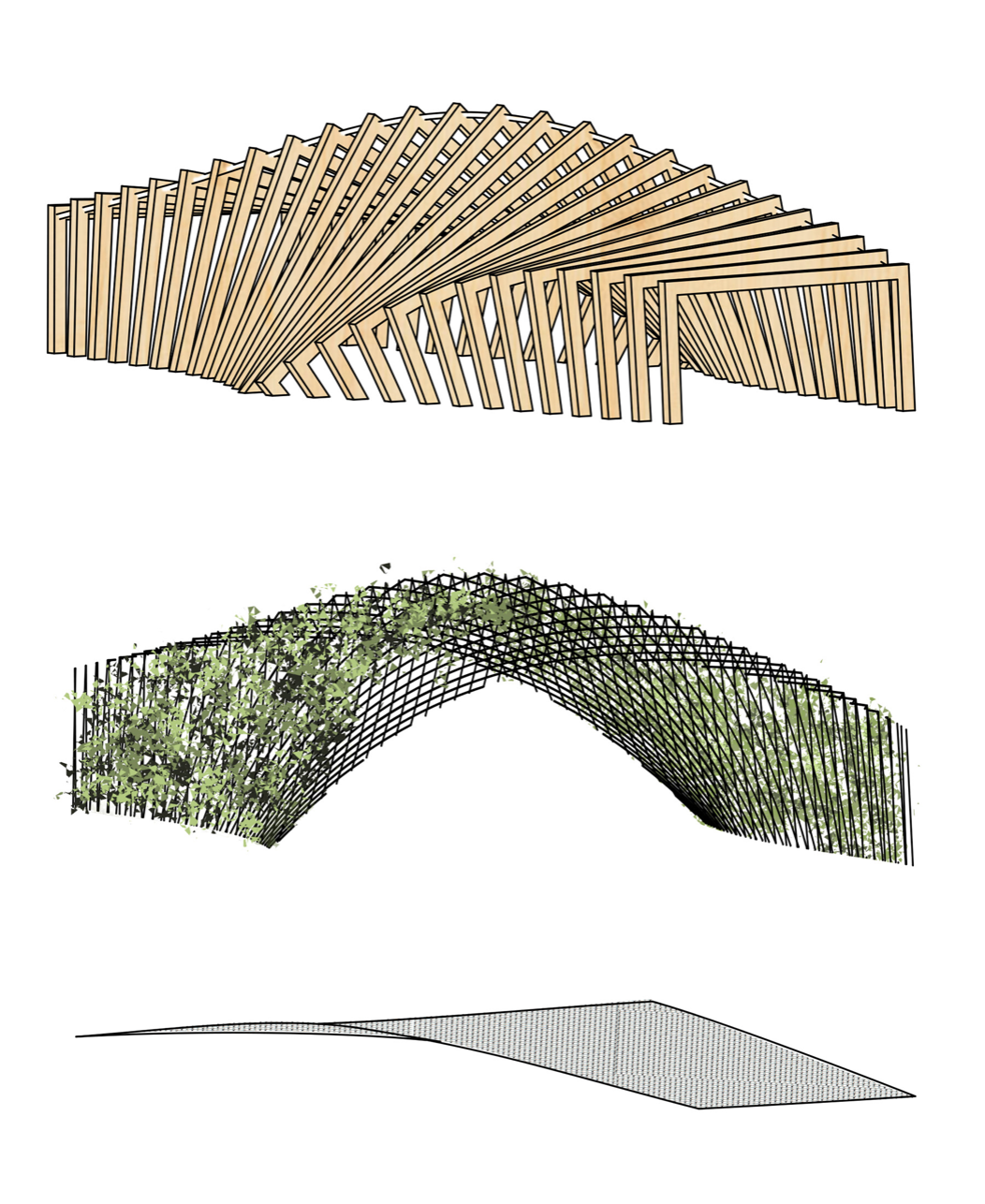
The structure is made up of three parts consisting of sustainable materials. The first being the twenty-six re-cycled timber frames that hold the twisting form of the pavilion. Secondly, the steel mesh lining the inside of the timber frame which is there to support vegetation growth up and around the structure. The third material is the flexible net/mesh that expands and contracts with weight distribution.
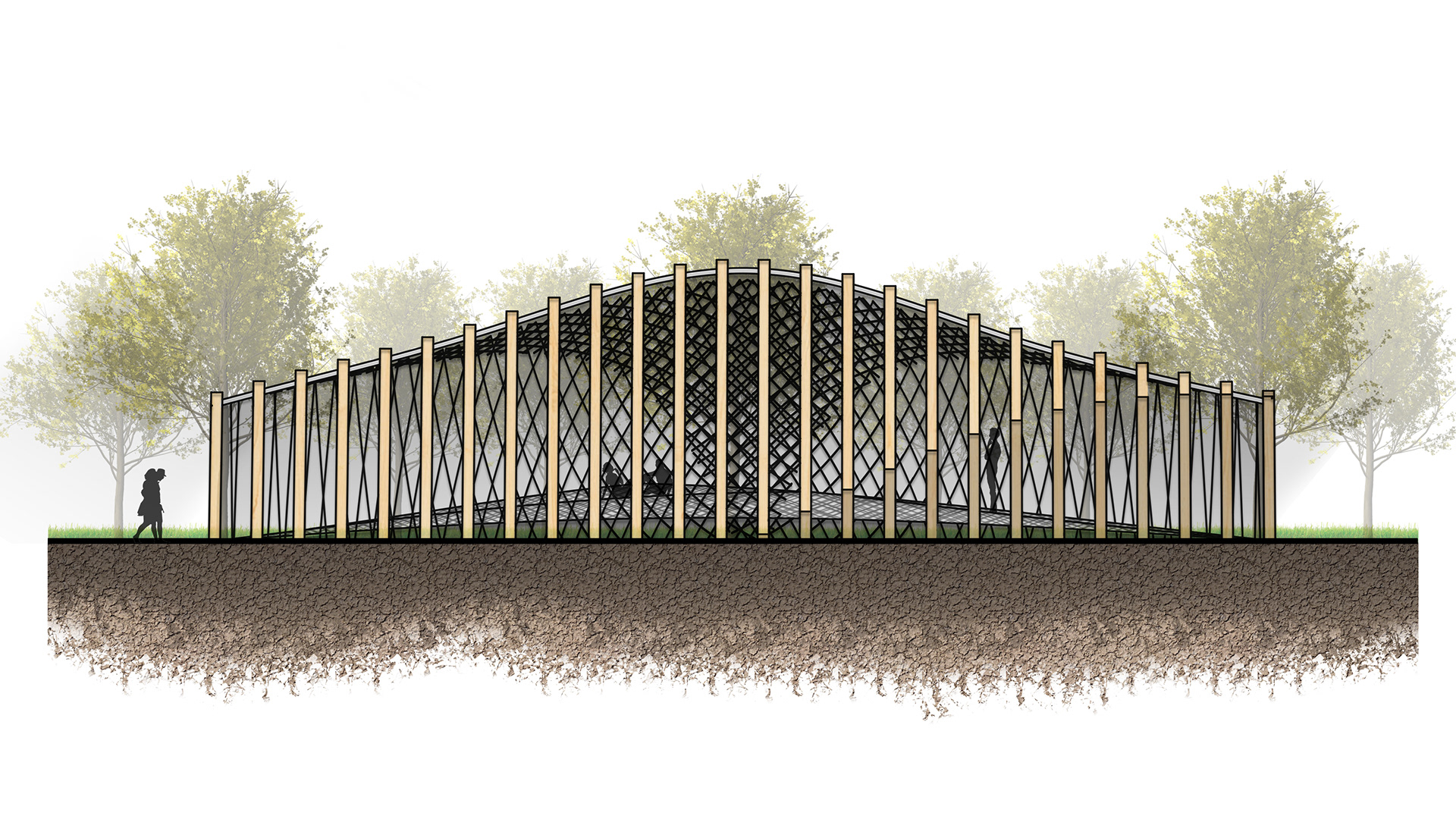
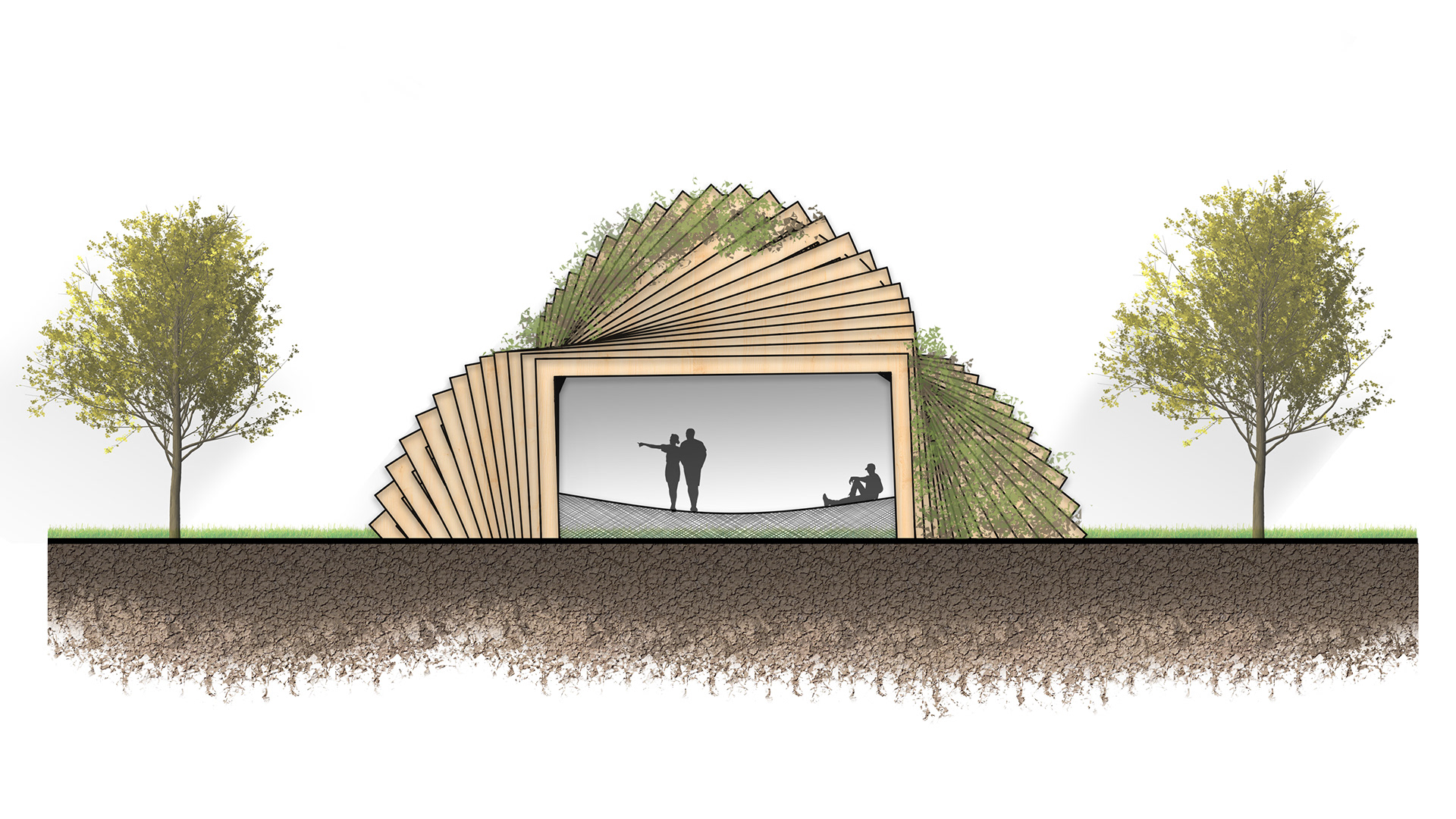
Located in the centre of London, for example within Hyde Park, the structure would measure approximately 6 metres in height, 12 metres in width, and 24 metres in length. Despite its scale, the pavilion is designed to blend into its surroundings with minimal visual impact. By aligning its height with that of the surrounding trees, views of the city are partially screened, creating a sense of retreat. The pavilion would function as an accessible destination for people living and working in the local area, as well as for tourists.
In conclusion, this pavilion questions how we currently inhabit urban environments and explores how these conditions might evolve in the future. While modest in scale, the project demonstrates how architectural structures can be developed to positively impact the environment, particularly by responding to and mitigating the effects of greenhouse gas emissions.